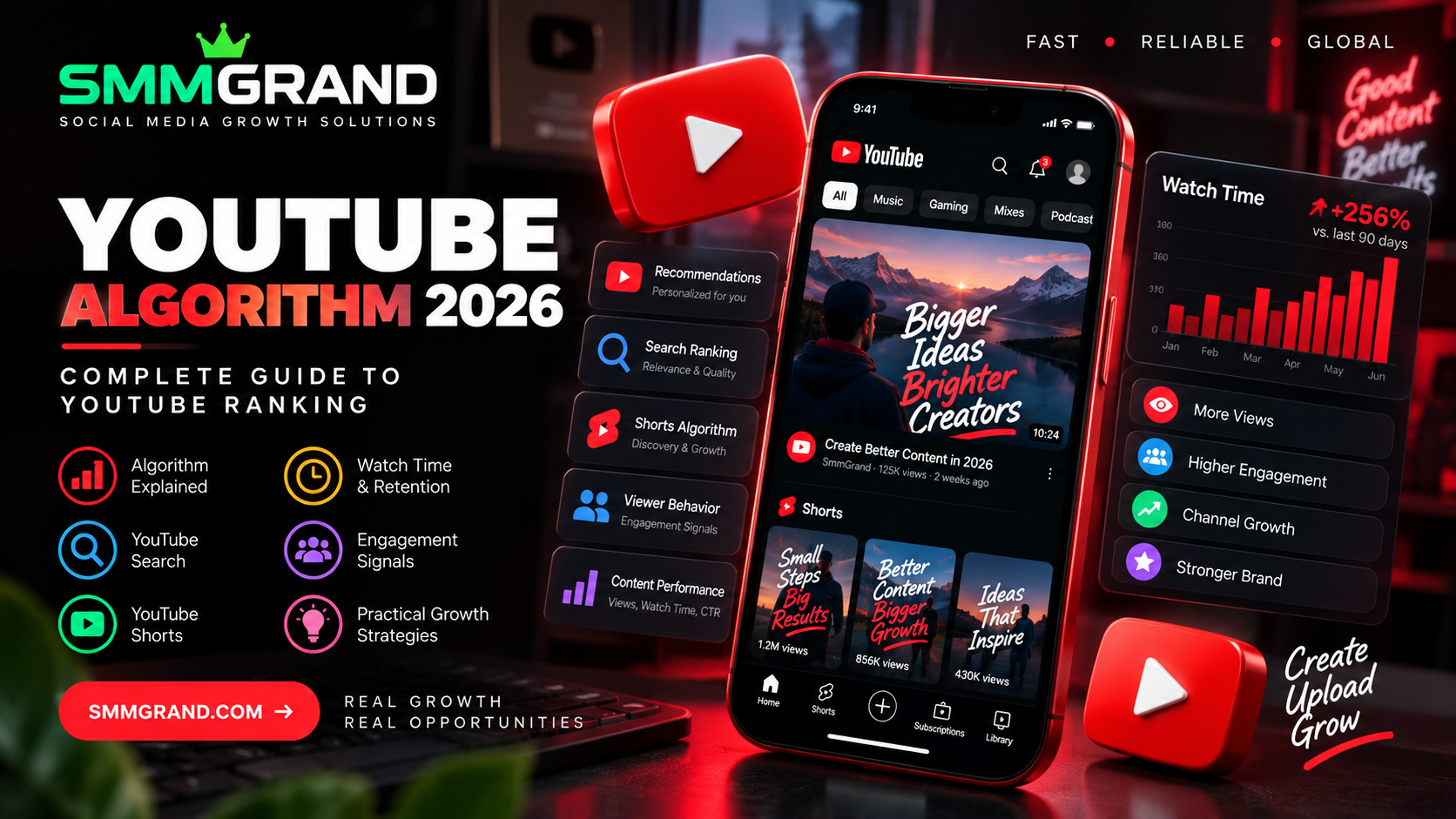
YouTube Algorithm 2026: Complete Guide to YouTube Ranking
YouTube Algorithm 2026: Complete Guide to YouTube Ranking
But how does YouTube decide which videos to show?
The answer is not a single algorithm.
## What Is the YouTube Algorithm?
YouTube recommendations are personalized.
This means there is no universal list of videos that every viewer sees.
YouTube's goal is not simply to maximize clicks.
## How Does the YouTube Algorithm Work in 2026?
YouTube evaluates content based on the relationship between viewers and videos.
The system can consider signals such as:
Different YouTube surfaces can rely on these signals differently.
## YouTube Recommendation System
YouTube's recommendation system can be thought of as a matching system.
"Which video is this particular viewer most likely to watch and enjoy?"
This distinction is important.
A video can have millions of views but still not be the best recommendation for a particular viewer.
Another video with fewer total views may be more relevant to that person's interests.
## The Three Major Performance Signals
YouTube's current guidance groups content-performance signals into three major areas:
Do viewers choose to watch the video when it is presented to them?
Once viewers start watching, do they continue watching?
This is where viewing behavior and retention become important.
Did viewers actually enjoy the experience?
This means a successful YouTube strategy should not focus only on getting clicks.
The video must also deliver what the title and thumbnail promised.
Watch time represents how much time viewers spend watching videos.
The ideal target depends on the type and length of the video.
A short tutorial and a two-hour documentary naturally have different viewing patterns.
Audience retention shows how viewers behave throughout a video.
A retention graph can help reveal where people:
If many viewers leave during the opening seconds, the introduction may need improvement.
Use retention data to improve your future videos rather than obsessing over one individual metric.
## Click-Through Rate and YouTube Thumbnails
A strong thumbnail and title can increase the likelihood that a viewer chooses your video.
However, a high CTR alone does not guarantee long-term success.
The better strategy is to create accurate, compelling packaging that attracts the right audience.
YouTube Search is different from the Home page.
YouTube says its Search system focuses on three key elements:
Engagement provides information about how viewers respond to results.
A basic YouTube SEO strategy should include:
- Accurate tags when appropriate
- Useful chapters where appropriate
- Content that satisfies the search intent
Do not fill titles or descriptions with unrelated keywords.
The goal is relevance, not keyword stuffing.
## How to Choose YouTube Keywords
Start with the problem your audience wants to solve.
For example, instead of targeting a broad phrase such as:
you could target a specific search intent:
"How to get more YouTube views"
"How to create YouTube Shorts"
Specific searches often make it easier to understand what the viewer actually wants.
Before creating the video, ask:
What question is this video answering?
What would the viewer expect to learn?
Can I provide a better or more useful answer?
A good YouTube title should communicate the value of the video quickly.
How the YouTube Algorithm Works in 2026
How to Get More YouTube Views in 2026
YouTube SEO: Complete Beginner's Guide
How to Grow a YouTube Channel From Zero
A title should create curiosity while accurately representing what viewers will receive.
Thumbnails are part of the video's packaging.
- Distinct from competing thumbnails
Avoid overcrowding the thumbnail with excessive text.
One clear visual idea is often more effective than a complicated design.
## How YouTube Home Recommendations Work
The YouTube Home page is highly personalized.
A viewer may see videos based on:
- Topics they frequently watch
- Videos watched by similar viewers
Suggested Videos appear alongside or after the video someone is currently watching.
YouTube tries to identify videos that the viewer is likely to watch next.
The currently watched video can be an important contextual signal.
This creates an opportunity for creators to build related content.
For example, a channel about YouTube growth could create a series:
How to Increase Audience Retention
These videos can address closely related viewer interests.
YouTube Shorts have their own viewing experience through the Shorts feed.
The Shorts feed is personalized based on what YouTube believes a viewer will want to watch next.
Short-form content should therefore be designed specifically for fast consumption.
A strong Shorts strategy can include:
## Does Posting Shorts Hurt Long-Form Videos?
YouTube evaluates individual pieces of content based on how viewers respond to them.
However, audiences can have different preferences for different formats.
A viewer who enjoys your Shorts may not necessarily want to watch your long-form videos.
The key is understanding your audience and measuring performance across formats.
## Does Subscriber Count Affect Recommendations?
Subscribers are important because they represent an existing audience.
YouTube recommendations are personalized and based on viewer behavior and content performance.
## Does YouTube Promote Videos With More Views?
Not simply because they have more total views.
YouTube recommendations are personalized.
A video with a large number of views may not be relevant to a particular viewer.
This is why total view count should not be confused with recommendation eligibility.
## How to Get More YouTube Views in 2026
There is no guaranteed method for generating viral views.
However, creators can improve their chances by focusing on the complete viewer experience.
### 1. Choose Topics People Actually Want
Look for questions, problems, trends and topics that your target audience cares about.
### 2. Improve Your Video Packaging
Create titles and thumbnails that accurately communicate the value of the video.
Avoid unnecessary introductions.
Get to the main topic quickly.
Structure your video so that each section naturally leads to the next.
### 5. Study Audience Retention
Look for moments where viewers consistently leave.
Use this information to improve future videos.
Build content around connected topics.
This can help viewers discover more videos from your channel.
Do not evaluate your entire channel using one metric.
## How Often Should You Upload on YouTube?
There is no universal upload frequency that guarantees growth.
Some creators publish multiple times per week.
Others publish once a week or even less frequently.
The better approach is to choose a schedule you can maintain while producing useful content.
Consistency is valuable because it gives you more opportunities to learn what your audience enjoys.
But uploading low-quality videos simply to increase frequency is not a reliable growth strategy.
## Does Uploading More Videos Guarantee More Views?
More uploads create more opportunities, but they do not automatically produce more recommendations.
YouTube's systems evaluate how viewers respond to individual videos.
Focus on improving topic selection, packaging and viewer satisfaction.
## YouTube Analytics: What Should You Track?
How often your thumbnails are shown to viewers.
How frequently viewers click after seeing an impression.
The amount of time viewers spend watching your content.
The average amount of time viewers watch a video.
Where viewers continue watching or leave.
Where viewers discovered your content.
Understanding these sources can help you decide what type of content to create next.
There are many myths about YouTube.
### Myth 1: YouTube Has One Algorithm
Different YouTube surfaces use recommendation and ranking systems differently.
Search, Home, Suggested Videos and Shorts can use different signals depending on the context.
### Myth 2: More Subscribers Automatically Means More Views
Subscriber count does not guarantee that subscribers will watch every new upload.
### Myth 3: You Need to Upload Every Day
There is no universal requirement to upload daily.
Quality and audience response matter more than following an arbitrary upload frequency.
### Myth 4: A Video Must Go Viral Immediately
Not every successful video becomes popular immediately.
### Myth 5: Tags Are the Secret to Ranking
Tags can help provide information about content, but they are not a magic ranking method.
The overall relevance and viewer response to the video are much more important.
## YouTube Growth Checklist for 2026
Before publishing a video, ask:
- Is the topic relevant to my target audience?
- Does the title clearly communicate the value?
- Does the thumbnail accurately represent the video?
- Does the opening immediately establish the topic?
- Does the video satisfy the viewer's search intent?
- Is the content useful, entertaining or informative?
- Have I removed unnecessary sections?
- Is the description relevant?
- Are my keywords naturally connected to the topic?
- Have I checked previous analytics?
- Do I have related videos that viewers can watch next?
### What is the YouTube algorithm?
### How does the YouTube algorithm work in 2026?
### Does watch time matter on YouTube?
### Does YouTube SEO still work?
Yes. YouTube Search considers relevance, engagement and quality when ranking search results.
### Does subscriber count determine YouTube ranking?
No. Subscriber count alone does not determine whether a video will be recommended.
### How can I get more YouTube views?
### Does Shorts help YouTube channel growth?
YouTube tries to connect each viewer with videos they are likely to watch and enjoy.
For creators, the most effective strategy is therefore not to chase algorithm tricks.